Cast Iron Pipe Descaling: What It Is And When Jetting Helps
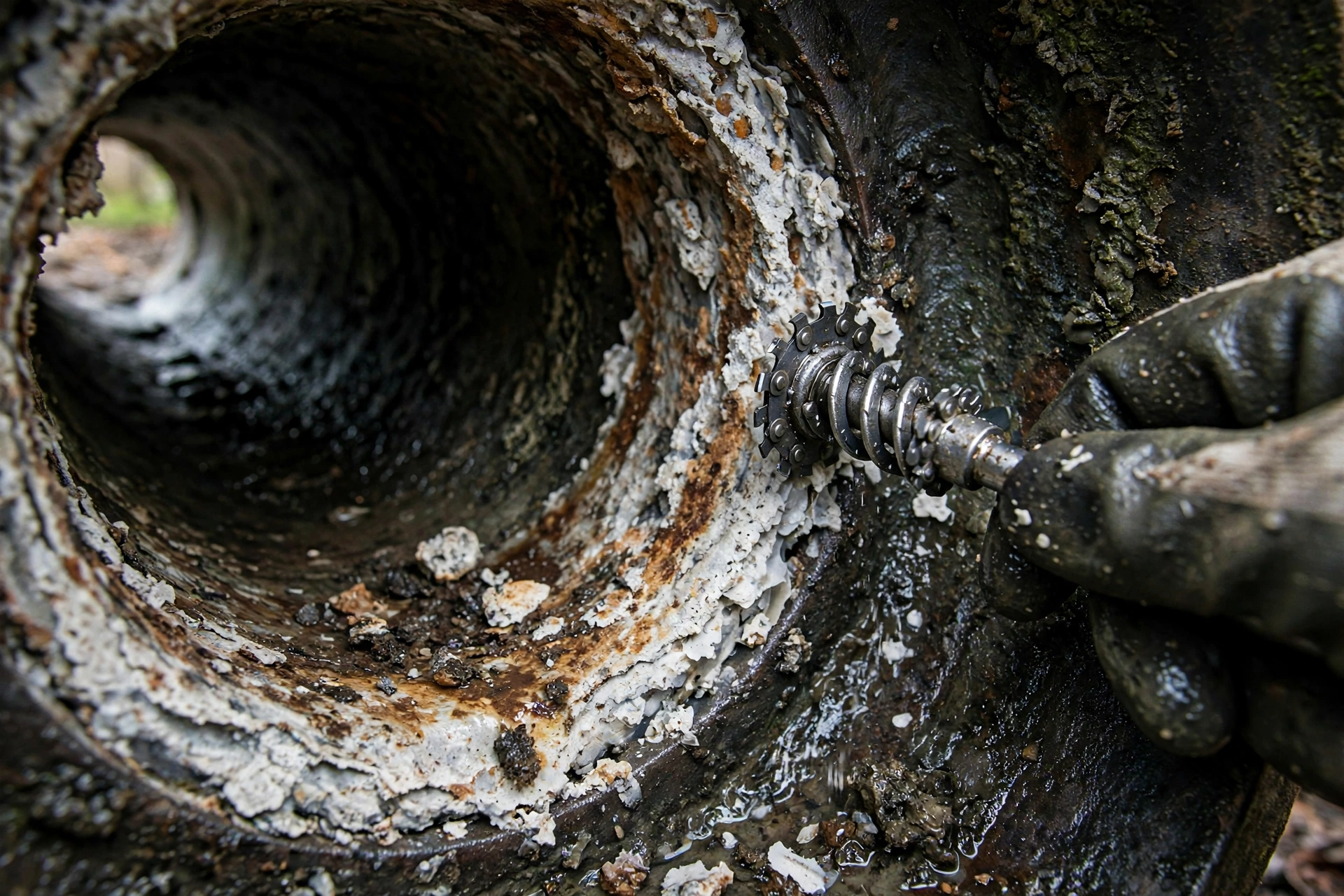
Cast iron pipe descaling is the removal of hard mineral scale from the inside of older cast iron pipes. Scale forms when hard water leaves mineral deposits on the pipe wall, year after year, narrowing the opening water can pass through. At first the change is invisible: a drain runs a little slower, a toilet gurgles now and then. Over time the narrowing causes repeat clogs that snaking only partly clears, because a snake pokes a hole through the blockage while leaving most of the scale on the wall. Descaling, by contrast, strips the wall itself — usually with a rotating chain descaler, often combined with hydro jetting to flush the loosened scale away.
How Does A Pro Judge Whether Descaling Will Help?
With a sewer camera. The camera shows how much scale is present, where it sits, and — most importantly — whether the pipe wall is still sound. Sound cast iron can be descaled and jetted, and the result is a wider, cleaner line that drains freely. Heavily corroded, cracked or thinned cast iron cannot: pressure and rotating tools could damage it further, and the pipe needs repair instead. That judgement cannot be made from symptoms alone, because grease, roots and scale cause similar slow drains. The camera is what turns a guess into a plan.
What Happens During Descaling?
First, the line is reached through a cleanout, the access point in a drain or sewer line. A camera check records the scale and the pipe's condition. Then the pro chooses the tool: a chain descaler for hard scale, a jetting nozzle for flushing, or a combination of the two. The descaler rotates inside the pipe and strips scale from the wall, while jetting water carries the debris out. A second camera check afterwards shows what remains and whether the pipe is in the condition expected. Where the pipe is damaged, the pro explains that instead of presenting cleaning as a fix.
Cast Iron, Clay And PVC: Why Material Matters
Cast iron is a heavy older pipe material prone to corrosion and mineral scale as it ages. Clay pipe, made in sections, has joints that roots can enter, but it does not scale in the same way. PVC pipe, the modern plastic used for drains and sewers, resists scale and corrosion far better, though it can still collect grease and sludge. Orangeburg pipe, an older bituminous-fibre material, can deform and is fragile under pressure, so it needs particular care. Knowing the material — and its condition — is why the camera check matters more than any general claim about jetting.
How Long Does Descaling Last, And What Affects Cost?
Descaling clears the scale present on the day. Hard water can deposit new scale over time, so results last longer in soft-water homes and shorter where water is very hard. No fixed interval fits every home. Cost factors, not prices, are what a homeowner can compare: the length of the line, how much scale is present, access through a cleanout, and whether camera checks are needed before and after. A pro who has seen the line can explain which factors apply.
Older home with slow drains? One free call connects you with a local pro.
Descaling is one of the related services on this site, listed as cast iron pipe descaling, and it connects naturally to the city pages: in Acampo, California, for example, 38.2% of homes were built before 1980, and many of those homes have the older pipe this guide describes. Hydro jetting in Acampo gives the local facts, hydro jetting in California gives the statewide picture, and emergency hydro jetting help covers the urgent cases where a scaled line has blocked completely.
Sources: U.S. Census Bureau, ACS 2020–2024 (California housing age); this guide's definitions of cast iron pipe, chain descaler, cleanout and mineral scale follow the project's entity list. No prices, job counts or statistics beyond the sourced figures above are claimed.